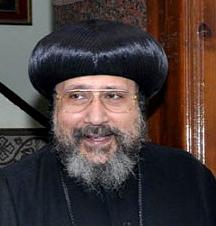
The year of our Lord 2015 is but a few hours away! Many happy returns! We beseech God to grant Egypt a peaceful and prosperous year, for Egypt has always been beautiful despite all the tribulations she has gone through. Egypt is beautiful indeed: for God blessed her people. She was blessed by the saints and prophets who lived on her land and the Holy Family that sought refuge therein. She is also beautiful for she has faithful children who have always toiled for her welfare. Happy New Year!
In the previous article, we spoke about Egypt’s division into four nomes, namely, Aigyptus, Augustaminca, Arcadia, and Thebes. This took place by the end of the Roman tenure and the beginning of the sixth century A.D. Then, we started talking about the Arab peninsula and looking into the etymology of the word “Arab”, trade and its routes. Subsequently many comments and queries arrived regarding the origins of the word “Arab”, as well as the peoples and civilizations in the Arab peninsula. This made us consider presenting a thorough study, using as many references as possible.
Looking into the origin of the word “Arab”, its meaning, and the reason of its appearance in the literatures of ancient peoples, we found out that until the first centuries A.D., the word did not indicate a certain people, nation, or language. Rather, it used to refer to a group of people who lived in the desert, especially in the Arab peninsula, which is why some historians would deem Sinai an “Arab” due to its arid nature.
The Meaning of the Word “Arab”
The word “Arab” made its debut with the Aramaic people who lived in eastern Euphrates. They used it to refer to the inhabitants of western Euphrates: for the word indicated the place. Thus, “Arab” signified “West”. Then, the word was borrowed by other Semite languages, such as, Hebraic, Babylonian, and Syrian. The word “Arab” had to do with “sunset” and “west” which connote other meanings like “blending” and “mixing”. Likewise, the Aramaic extracted the word “Friday” from “Arab” to connote “the day of sunset”. In fact, the Jewish week ended on Friday, and was followed by Saturday (Sabbath day) which they revere. Thus, Friday is the day in which a week comes to an end or fades away and another week starts after Sabbath.
Thus, as the old Aramaic use of “Arab” referred to whoever lived in the desert western Euphrates, the meaning of the word became more comprehensive, that is, it would refer to whoever lived in the desert. According to Dr. Jawwad Ali, the word “Arab” refers to whoever lives in the desert, leading a nomadic life, one of poverty and vagabondism. Henceforth, the word “Arab” and “desert” intermingled with “west” to give rise to “Arabs, the dwellers of the desert”.
Ancient Literatures
In ancient Babylonian writings, the term “desert” derived from “Arab land” and its inhabitants as well as those who dwelt western Euphrates.
Assyrian writings contained the word “Arab” since 824 B.C. when king Shalmaneser III recorded his triumph over the Aramean king and his eleven allies in the Battle of Qarqar (Carcar) in 853 B.C. Professor Daniel Luckenbill, Assyriologist, mentions the text written by the Assyrian king in which the latter says, “I destroyed Carcar, his royal capital. I burned it. I combated 1200 chariots and 10,000 camels that belonged to Arabs.” The word “Arabs” in this context refers to tribes that ruled the desert at that time.
Persians mentioned the word “Arab” to denote the “desert lands that were adjacent to Sassanid”. This appeared in writings about king Darius in 486 B.C.
Hebraic Literature
The word “Arab” appeared in the Book of Isaiah as follows: “The oracle about Arabia. In the thickets of Arabia you must spend the night, O caravans of Dedanites.” The word “Arabia” here refers to the desert. Thus, it has nothing to do with any particular nation as is the case nowadays. Arabia, according to prophet Isaiah, is the land located between Iraq and the Levant. It is inhabited by nomads.
Likewise, prophet Ezekiel spoke of the trade between the Hebrews and Arabia at the time of the Captivity. He writes, “Arabia and all the princes of Kedar were your customers; they did business with you in lambs, rams and goats. The merchants of Sheba and Raamah traded with you; for your merchandise they exchanged the finest of all kinds of spices and precious stones, and gold. Harran, Kanneh and Eden and merchants of Sheba, Ashur and Kilmad traded with you. In your marketplace they traded with you beautiful garments, blue fabric, embroidered work and multicolored rugs with cords twisted and tightly knotted.”
In the Pentateuch, Hebrews used to refer to the Arabs as, “the easterners” or the “Kedmonites” in Hebrew. This indicates that they lived to the east of the Hebrews’ land. Historian Gorgy Zidan explains this as follows, “Ancient peoples were in the habit of ascribing people to their lands according to the directions of sunrise and sunset, which is why the Hebrews called the Arabs ‘easterners’ for the desert they lived in was eastern Palestine.”
They were also known as Ishmaelites, being the descendants of Ishmael, the son of Abraham, God’s friend. This name was mentioned within the context of Jacob’s sons selling their brother Joseph to get rid of him, “So when the Midianite merchants came by, his brothers pulled Joseph up out of the cistern and sold him for twenty shekelsof silver to the Ishmaelites, who took him to Egypt.” Thus, Arabs used to pass by the land of the Hebrews in caravans. They had commercial relations with Egypt. Yet, the Hebrews disliked them.
They were also called Nabataean. This was late in the Maccabees era.
In famous Jewish books, such as, the Talmud and Mishna, the word “Arabim” refers to “nomads”. Job was said to be the greatest of the easterners, that is, the greatest of nomads. We read, “There was a man in the land of Uz, whose name was Job; and that man was blameless and upright, and one who feared God and shunned evil. And seven sons and three daughters were born to him. Also, his possessions were seven thousand sheep, three thousand camels, five hundred yoke of oxen, five hundred female donkeys, and a very large household, so that this man was the greatest of all the people of the East.”
Greek and Roman Literature
Romans and Greeks linked “Arab” to “nomad. Herodotus referred to the desert and the land located from eastern the Nile till Euphrates as “Arab”. The Arab lands are those inhabited by nomads, despite the differences in their languages and dialects. Herodotus said that Egypt was altogether different from the Arab land adjacent to her. He considered Sinai Peninsula part of the Arab land due to its arid nature. On the other hand, Greeks considered the southern part of the Arab peninsula, located between the Persian Gulf and the Red Sea, part of Ethiopia, as it was different in nature from the Arab peninsula desert. Thus, Ethiopia, Yemen, and the bank of the Persian Gulf were considered one region. They called it Ethio-Asia.
Greek and Latin writings referred to the “Arabs” as the peoples that the Arameans and Babylonians called “westerners” or the ones which Hebrews called “easterners”. Strabo associated Arabs with tents. So, he called them, “tent dwellers and camel shepherds.” Pliny referred to them as nomads or inhabitants of the desert, be it that of the Arab peninsula, the Levant, or Sinai Peninsula.
Ancient Civilizations in the Arab Peninsula
In the southern region texts, namely those of Ma’in, Qatban, Hadhramut, Sheba, and Himjar, the term “Arabs” referred to all the inhabitants of the peninsula, be they nomads or urban. As for “Arab”, it referred to the nomads. On the other hand, nomads bore the names of their towns and kingdoms, such as, Sheba and Himjar. When Shebans mentioned some tribes and their Bedouins, they would mention the tribe’s name. On the other hand, Himjars would call their kings, “The king of Sheba, Dha Raydan, Yemnat, and their Bedouins.”
Happy new year, Egypt… Stories never end in Beautiful Egypt.