Arabic
Thursday, June 4, 2026
The Coptic Orthodox Cultural Center
  • About COCC
    • Egypt
      • About COCC
      • Our Goals
      • Our Mission
      • Our Achievments
      • Halls
      • Architectural Design‏
      • Vacancies
      • Donations
      • Security Advisors
      • Managerial Advisor
      • Cultural Advisor
      • Public Relations
      • Ecumenical Relations
      • Information Technology
      • Documentation Management
      • Collectibles Management
      • Marketing Management
      • Legal Management
      • Human Resources
      • Experimental Arts Center
      • Fine Arts Center
      • Center for Strategic Studies & analytical
      • Center for International Cooperation & the Exchange of Cultures
      • Administrative Affairs
      • Center of Studies & Administrative Development
      • Center for International Social Communication
    • U.S.A
    • Germany
    • Australia
  • Head of the Center
    • Center President
    • رئيس المركز الثقافي القبطي الأرثوذكسي
    • اخبار رئيس المركز
    • مقالات
  • Cultural Department
    • الأنشطة
      • كاتب وكتاب
      • مؤتمرات وندوات
      • احتفالات وتكريمات
    • Library
      • انشطة المكتبة اطفال وشباب
      • Children Library
    • COCC Releases
      • كتب
      • مجلة مصر الحلوة
      • نبذات
      • إصدارات المركز CD
    • علاقات مسكونية
    • بيت العائلة المصرية
  • Media Department
    • ME Sat Channel
      • ME Sat Channel Programs
    • أخبار
    • التقرير اليومى
    • أنشطة المركز في الصحف
  • Educational Department
    • Cocc Academy and ME Sat Media Academy
      • Courses for Kids
      • Courses for Adults
        • كللهما بالمجد
    • Scholarships
    • معسكرات خارجية
  • Service Department
    • “Do you Love Me?” Ministry
    • General and religious tourism
  • Awards
    • Wisdom and Compassion “Pope Shenouda III” Award
    • Humanities and Culture “Ola Ghabbour”Award
    • Creativity and Innovation “Makram Mehanna” Award
ادعمنا
No Result
View All Result
  • About COCC
    • Egypt
      • About COCC
      • Our Goals
      • Our Mission
      • Our Achievments
      • Halls
      • Architectural Design‏
      • Vacancies
      • Donations
      • Security Advisors
      • Managerial Advisor
      • Cultural Advisor
      • Public Relations
      • Ecumenical Relations
      • Information Technology
      • Documentation Management
      • Collectibles Management
      • Marketing Management
      • Legal Management
      • Human Resources
      • Experimental Arts Center
      • Fine Arts Center
      • Center for Strategic Studies & analytical
      • Center for International Cooperation & the Exchange of Cultures
      • Administrative Affairs
      • Center of Studies & Administrative Development
      • Center for International Social Communication
    • U.S.A
    • Germany
    • Australia
  • Head of the Center
    • Center President
    • رئيس المركز الثقافي القبطي الأرثوذكسي
    • اخبار رئيس المركز
    • مقالات
  • Cultural Department
    • الأنشطة
      • كاتب وكتاب
      • مؤتمرات وندوات
      • احتفالات وتكريمات
    • Library
      • انشطة المكتبة اطفال وشباب
      • Children Library
    • COCC Releases
      • كتب
      • مجلة مصر الحلوة
      • نبذات
      • إصدارات المركز CD
    • علاقات مسكونية
    • بيت العائلة المصرية
  • Media Department
    • ME Sat Channel
      • ME Sat Channel Programs
    • أخبار
    • التقرير اليومى
    • أنشطة المركز في الصحف
  • Educational Department
    • Cocc Academy and ME Sat Media Academy
      • Courses for Kids
      • Courses for Adults
        • كللهما بالمجد
    • Scholarships
    • معسكرات خارجية
  • Service Department
    • “Do you Love Me?” Ministry
    • General and religious tourism
  • Awards
    • Wisdom and Compassion “Pope Shenouda III” Award
    • Humanities and Culture “Ola Ghabbour”Award
    • Creativity and Innovation “Makram Mehanna” Award
No Result
View All Result
The Coptic Orthodox Cultural Center
No Result
View All Result
Home رئيس المركز Articles

Beautiful Egypt 45 – «The Real End» March 2, 2014

by admin
6 April 2017
in Articles
Share on FacebookShare on Twitter


   In the previous article, we spoke of Valens’ intolerance, persecution of the Coptic Orthodox Church, the departure of Pope Athanasius and the tenure of Pope Peter II. These Popes, as well as bishops and priests suffered from exile and the people’s severe persecution. We spoke of historians’ counting Valentinian I and his brother Valens’ tenure the beginning of the division of the Roman Empire. Valentinian was succeeded by his son Gratian who made his brother Valentinian II co-emperor of the West. Then, Gratian appointed commander Theodosius ruler of the East.

Theodosius I (379-395 A.D.)

   He was Emperor of the West till 392, then of the East and West from 392 to 395. He was born in a northern Spain province. He was interested in studying history. His father, Prince Flavius Theodosius, was one of the bravest Roman commanders in Africa. Theodosius fought with his father, and participated in crusades against the British enemy during 368 and 369, the Germans in 370, and the Balkans from 372 to 373.

   When his father was executed owing to his enemies’ conspiracies, Theodosius returned to Spain. He remained there until Emperor Gratian summoned him after his uncle Valens’ defeat and death in 378, seeking his help as an adept warrior. In 379, he proclaimed him co-emperor to rule the East, as well as Dacia (Romania) and Macedon. He called him Augustus of the East. During his first term (379-380), Theodosius, he resided in Salonika and strove to establish an army. So, he restored order to it and strengthened the Empire’s presence in the Balkans. Also, he defeated the Ostrogoths who strove to make treaties with the Roman Empire in 382.

   Theodosius was a brave warrior. Also, he was a devout Christian. The Empire, thus, was ruled by a trio, namely, Gratian, Valentinian II in the West, and Theodosius in the East. Theodosius spent the time from 380 to 387 in Constantinople whence he cared for improving the country’s circumstances. There, he had the biggest complex known in ancient times by the name of Trajan’s Market built in Rome.

Theodosius Rules East and West

   In 383, Gratian led an army to counterattack the Empire’s enemies in France, but he was killed. Thus, the country was ruled by Theodosius and Valentinian II. Theodosius was charged of conspiring with Gratian’s enemies, which is not true.

   No sooner had news of Gratian’s death reached the Spanish commander Maximus at the English borders, than he decided to take over, and his sentries proclaimed him emperor of the Western provinces instead of Gratian. At that time, Theodosius was not able to stop Maximus for he did not have enough troops. Nor were the borders safe. Thus, the Western Roman Empire was ruled by both Maximus and Valentinian II, whereas the Eastern was ruled by Theodosius.

   This trio continued to rule until Maximus invaded Italy in 387, which made Valentinian II flee to Salonika. Hence, Theodosius declared war on him. At that time, Theodosius had become stronger than before, having made treaties with the Persians and secured the Empire’s eastern borders.

   Theodosius summoned a brigade of the Roman army from Egypt and Africa. Valentinian II sent a fleet to Italy and mobilized his armies to confront Maximus in 388. The latter was defeated and killed in battle. As such, the Empire was ruled by Theodosius and Valentinian II. In 392, Valentinian II was killed by his councilor Arbogast who declared Eugenius (who was close to the pagan senate) ruler of the West.

   Theodosius decided not to expose the country to a civil war. However, he issued decrees in 391 and 392 to prohibit paganism, which led to conflicts between him and the pagans who supported Eugenius. In 394, the two armies met at the eastern borders of Italy. Theodosius emerged victorious. Both Abrogast and Eugenius were killed. As such, Theodosius the Great became ruler of the Eastern and Western Roman Empire. Historians maintain that he was the last Caesar to do so. Theodosius died unexpectedly in 395, having ruled individually for only one year.

Emperor Theodosius’ Personality

   Theodosius was fair and well-mannered. So, he cared for the country’s prosperity, as well for construction. Likewise, he loved and respected Christianity which he made the country’s official religion.

   Caesar Theodosius strove to annihilate paganism in the entirety of the Empire ever since he ruled the East in 379 until he issued a decree in 391 in which he warned against presenting offerings to idols and visiting temples. He also prohibited all sorts of idolatry, offerings, incense, and divination. Yet, he was tolerant with pagans, and appointed some of them in high-ranking posts.

The Impact of His Policy on Egypt

   Theodosius’ policy had a great impact on Egypt, whereby pagan temples were closed down and pagans stopped their rituals. Some historians assert that, at that time, Egyptians had about forty thousand idols. They were replaced by Christianity which core was the oneness of God. Yet, there remained many pagans in Upper Egypt. However, paganism was annihilated with time. Ever since, Egyptians have been known by the name of “Copts”, a nomenclature descriptive of the ancient Egyptians’ descendants who were Christianized. These were the people who emerged powerful and famous.

   Christians have always practiced their rituals openly, that is, on the religious level. Generally, during Theodosius’ tenure, Egypt became prosperous. Seditions were annihilated. Thus, she led a secure epoch, which had a great impact on the country’s architecture. Trade flourished, and wealth increased. Some references mention that in 390, Theodosius ordered the moving of Tothumus III’s obelisk from Thebes to Constantinople whereby it was divided into three pieces, then readjusted soundly.

Caesar Theodosius and the Church

   When Theodosius ascended the throne, he realized that the Church had become devastated by Valens’ persecution of the Orthodox. This made him ask Pope Peter II to reform her conditions, for Emperors and rulers had great confidence in the Coptic Popes. Pope Peter II took care of the church of Constantinople until he handed it over to St. Gregory of Nazianzus, after which he continued to care for his congregation until he reposed in 380. He was succeeded by Pope Timothy I who was a disciple of Pope Athanasius the Apostolic. Emperor Theodosius called for a second ecumenical council in Constantinople in 381. In fact, the first council was held in Nyssa in 325.

The Division of the Empire

   Theodosius was succeeded by his sons Arcadius and Honorius. Ever since, the Roman Empire became two independent kingdoms, one in the East (which capital was Constantinople) and the other in the West (which capital was Rome). Hence, Theodosius’ death marks the real end of the Roman Empire. The East was ruled by Arcadius, and Egypt was governed by Eastern Caesars (aka. Roman Caesars). Some historians count the Roman Caesars’ ruling Egypt the era of the thirty-fifth dynasty of those that ruled the country, for stories will never end in Beautiful Egypt.

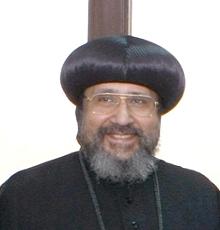
General Bishop

Head of the Coptic Orthodox Cultural Center

Tags: Almasry AlyoumBeautiful EgyptThe Real Endالمصري اليومالنهاية الحقيقـةثيئودوسيوس الأولثيئودوسيوس قيصر
Previous Post

Principles – Kind Words (5) – The Soft Answer – 1/3/2014

Next Post

Mutual Interests – “Dialogue 5” – Mosawer –5/3/2014

Next Post
(العربية) نيــافــــــة الأنبـــا إرمـيــــــا: بيت العائلة نجح في رسالته

Mutual Interests – "Dialogue 5" – Mosawer –5/3/2014

Facebook Twitter

(العربية)

  • عن مكتبة مارمرقس العامة
  • انشطة مكتبة مارمرقس
  • اخبار مكتبة مارمرقس

Recent Posts

  • The Aristotelian Academy announces the opening of registration for the “Biblical Studies” course
  • Bishop Ermia and the Egyptian Family House congratulate the Governor of Cairo on Eid al-Adha
  • Bishop Ermia the “Do Not Be Afraid” concert at Anba Reweis Theater, with the participation of Bishop Sarabamon and Bishop Elia

© 2022 المركزأالثقافي القبطى الارثوذكسي

No Result
View All Result
  • About COCC
    • Egypt
      • About COCC
      • Our Goals
      • Our Mission
      • Our Achievments
      • Halls
      • Architectural Design‏
      • Vacancies
      • Donations
      • Security Advisors
      • Managerial Advisor
      • Cultural Advisor
      • Public Relations
      • Ecumenical Relations
      • Information Technology
      • Documentation Management
      • Collectibles Management
      • Marketing Management
      • Legal Management
      • Human Resources
      • Experimental Arts Center
      • Fine Arts Center
      • Center for Strategic Studies & analytical
      • Center for International Cooperation & the Exchange of Cultures
      • Administrative Affairs
      • Center of Studies & Administrative Development
      • Center for International Social Communication
    • U.S.A
    • Germany
    • Australia
  • Head of the Center
    • Center President
    • رئيس المركز الثقافي القبطي الأرثوذكسي
    • اخبار رئيس المركز
    • مقالات
  • Cultural Department
    • الأنشطة
      • كاتب وكتاب
      • مؤتمرات وندوات
      • احتفالات وتكريمات
    • Library
      • انشطة المكتبة اطفال وشباب
      • Children Library
    • COCC Releases
      • كتب
      • مجلة مصر الحلوة
      • نبذات
      • إصدارات المركز CD
    • علاقات مسكونية
    • بيت العائلة المصرية
  • Media Department
    • ME Sat Channel
      • ME Sat Channel Programs
    • أخبار
    • التقرير اليومى
    • أنشطة المركز في الصحف
  • Educational Department
    • Cocc Academy and ME Sat Media Academy
      • Courses for Kids
      • Courses for Adults
    • Scholarships
    • معسكرات خارجية
  • Service Department
    • “Do you Love Me?” Ministry
    • General and religious tourism
  • Awards
    • Wisdom and Compassion “Pope Shenouda III” Award
    • Humanities and Culture “Ola Ghabbour”Award
    • Creativity and Innovation “Makram Mehanna” Award

© 2022 المركزأالثقافي القبطى الارثوذكسي